The Fourteen Generations of HIRADO ESTZAN – KAKUFUSA Porcelain
The roots of this artistic tradition stretch back to Korea. While campaigning on the Korean peninsula in 1598, Daimyo (Japanese feudal lord) Shigenobu Matsuura admired the porcelain produced there. His troops captured craftsman Koseki and his son Sannojo, brought them back to Western Japan, and forced them to practice their craft on Hirado Island.
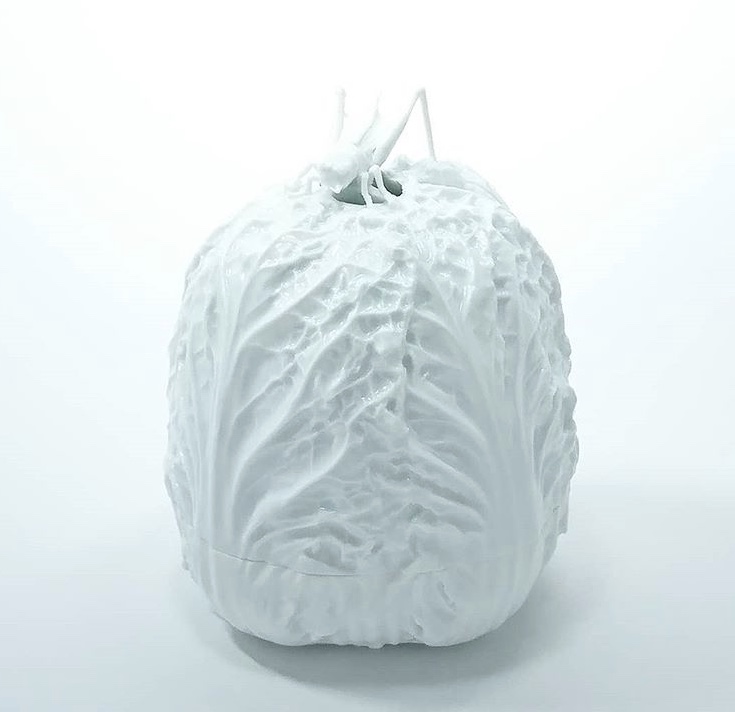
The search for better materials led Koseki to the village of Mikawachi on the eastern border of Nagasaki prefecture. With the fine Amakusa clay found nearby, the family began to produce increasingly intricate, delicate designs. His work became known as Hirado-Mikawachi porcelain. Much prized by the Hirado Daimyo, it was often used for official presents. In 1664, Koseki’s grandson was awarded a Japanese surname in recognition of the family’s accomplishments, becoming Yajibei Jyoen Imamura.
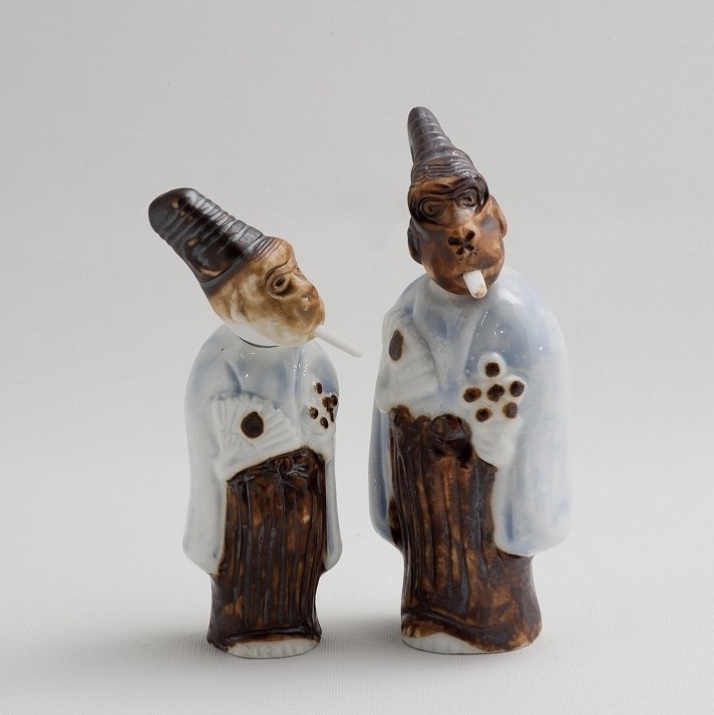
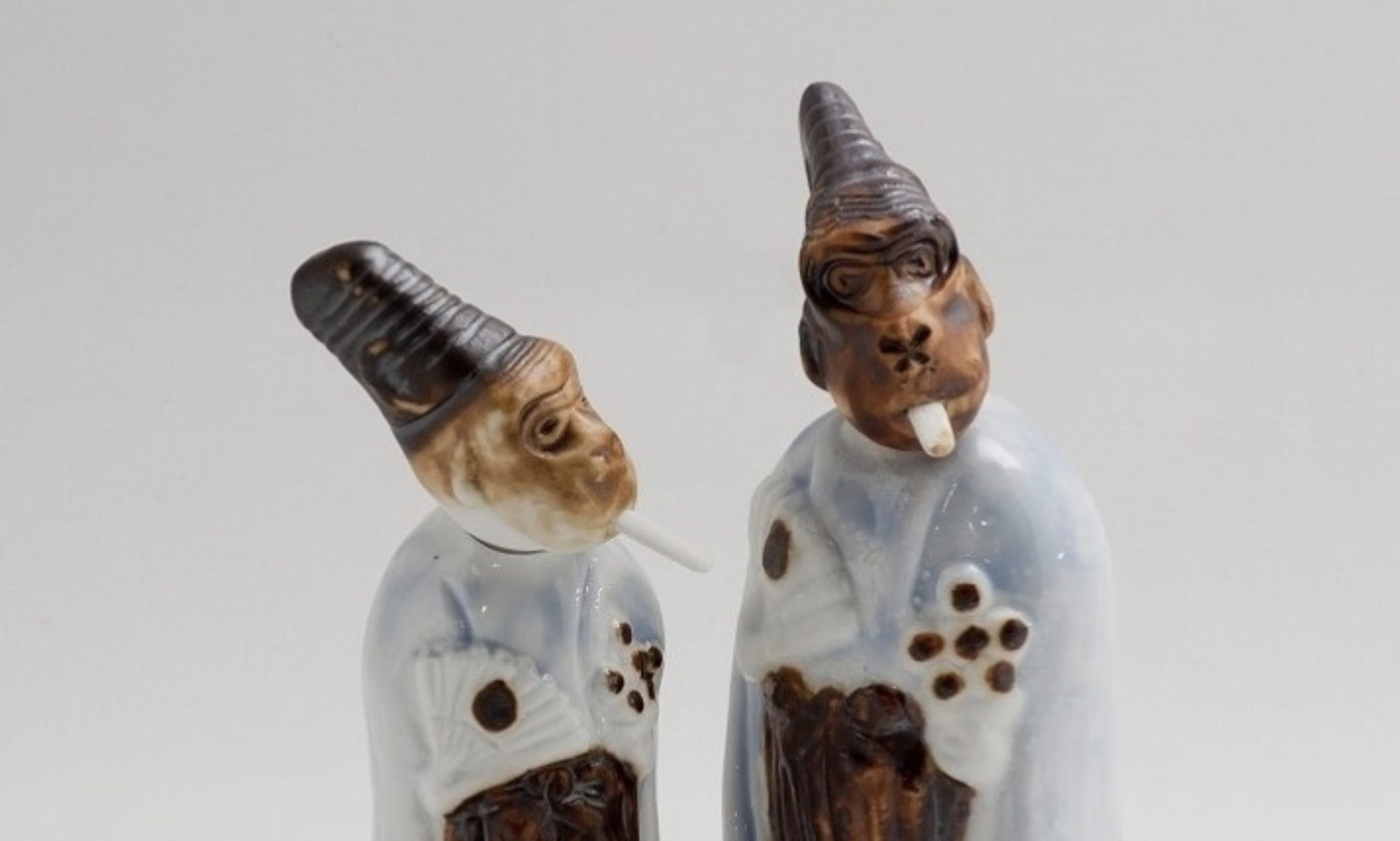
It was a left-handed compliment, since the name Jyoen can be translated as “like a monkey,” but it led to one of the family’s most famous products. Secretly mocking his employers, Yajibei Imamura designed a small porcelain monkey doll that stuck its tongue out when shaken. It became unexpectedly popular and many samurai wore them as decorations on their obis (sashes). Two centuries later, the monkey doll was among Japanese crafts exhibited at the Paris International Exposition in 1867, where several hundred copies were purchased by Empress Eugenie. They are still produced today and considered good luck charms for the household.